


When my brother and I were deciding what to put on our mother’s gravestone, what we came up with – and felt hit the nail on the head – was “Devoted to Family and Creative Expression.”
Add to that the fact that our mother was a great teacher. (As I’ve often been told at reunions by my high school classmates who had her for World Literature.)
Which suggests why I learned early on to place a high value on creativity. Indeed, over the years, I’ve come to believe that creativity is one important route to contacting the sacred.
What, you may ask, does creativity have to do with the sacred?
The answer, of course, has to do with the quality of our experience. I say “of course” because of another idea that I believe strongly:
Everything of value necessarily gets its value from its impact on the quality of experience.
In a world without sentient beings of some kind, whose experiences can be more or less “fulfilling,” more or less “deep,” it would make no sense to talk about any kind of “better” or “worse.” And thus, in such a world, it would make no sense to talk about the “sacred,” which I define as “value to the nth degree.”
A route to the sacred, then, would have to mean that it brings one to some especially valuable kind of experience.
The “sacred” is always contrasted with “the mundane.”
And what differentiates experience of contacting the sacred from one’s mundane experience is that the heart and/or soul and/or mind and/or body are opened up to apprehend something bigger, richer, and ultimately connected with the foundations of our being and the meanings of our existence.
To see how creativity moves us toward a deeper level of experience, consider this:
Just as the sacred contrasts with the mundane, so also does the creative contrast with the habitual.
Which isn’t to deny the value – even the necessity – of the habitual.
If it weren’t for habits, we wouldn’t be able to tie our shoes mindlessly in the morning, or drive a car while conversing. A habit is a well-worn trail in our traversing life. The motto of the habitual is “It worked before so let’s keep doing it.” And by “worked,” habit means that it led to a satisfactory outcome.
Think of it this way:
The main game we’re all playing is the game of Life and Death. But actually, there are two different games because there are two different meanings to being “dead.”
There’s the game of literal death vs. life. And there’s the game of deadened vs. feeling alive.
In the game where “dead” means “not surviving,” our goals is to avoid defeat. Given that for billions of years, natural selection has been mostly about “selecting out” through death, a “satisfactory outcome” is plenty good.
The habitual – i.e. doing what’s worked – is a fine strategy for winning the game of life vs. death. Survival is a “satisfactory outcome” in that game.
But it works at a cost that’s paid in the game of deadened vs. feeling alive. To win that game, one seeks to maximize how deeply alive one feels. That’s playing not to avoid defeat, but to win.
Experiencing things – seeing, feeling, thinking, acting – in habitual ways may work, but repetition over time tends to drain things of their meaningfulness.
(The face of one’s wife is just there, and it isn’t filled with a beauty that one experiences through one’s love. The mountain across the way is just there, rather than being the dramatic expression of the earth that also bore us and a marvel for that. The proverb becomes shopworn, and no longer packs the punch it did when some creative person first came up with it.)
Creativity breaks out of the habitual. It involves encountering the world freshly, which is enlivening.
“More alive” itself touches upon “the sacred.” And when what that creativity freshens partakes of the Good, the True, and the Beautiful – as the creative often does – the experience of it takes us still more directly into the realm of the sacred.
Creativity bears fruit in creating something that’s both new and of value.
(“Of value” can mean the value of Truth, or of Beauty, or of Usefulness. It can be in works of art, or new insights, or in problem-solving in any endeavor, or in the spontaneous play of human interactions.)
The rewards of creativity extend to the wider world. When the rest of us take in the fruits of others’ creativity – in a movie, or poem, or illuminating breakthrough theory – we, too, experience some kindred breakthrough into the new and alive.
(The impressionist painters saw the world in a new way, and were valued by those they taught to see in that new way, too.)
Almost everything of value that makes up our civilization started out as an act of creativity. Indeed, were it not for human creativity, our kind would not have its unique place in the world as the only one, among all earth’s creatures, to invent its own way of life.
In view of all these benefits – to the person who lives in the creative mode, and to the world at large – should we not be concerned about what’s widely said about our schools: i.e. that they tend more to stifle rather than nurture the creativity of our children?
 A Mind-Blowing Collaboration Between a Human and an AI
 My Op/Ed Messages
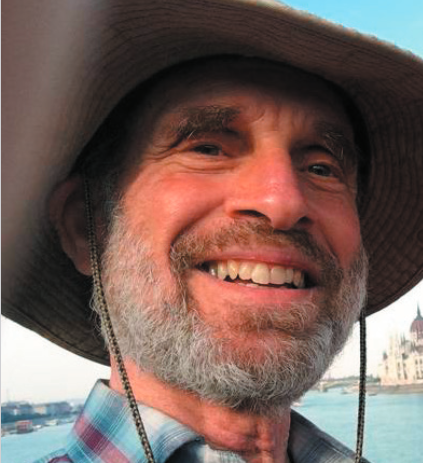 Andy Schmookler’s Podcast Interviews
 The American Crisis, and a Secular Understanding of the Battle Between Good and Evil
 None So Blind – Blog 2005-2011 on the rising threat to American Democracy
 How the Market Economy Itself Shapes Our Destiny
 The Sacred Space of Lovers
 The River and Its Channel: Bottom-Up (Flow) and Top-Down (Control) in Fostering the Good
 Ongoing Commentary to Illuminate the American Crisis
 What’s True About Meaning and Value
 Andy’s YouTube Channel
 The Fateful Step
 How the Ugliness of Civilized History is not Human Nature Writ Large
 Major Relevant Essays
 Healing the Wounds, Inflicted by the Reign of Power, that Drive Us to War
 Our Life-Serving Inborn Experiential Tendencies
 A Quest to Bridge America’s Moral Divide – 1999
 The Heirloom Project
 Knowing What’s Right to do Is Not a No-Brainer