


One of the great virtues of how Riderwood sets up its community life, is that it makes it really easy for people to check out the possibilities of friendship. The two couples, or whatever the configuration, agree that they’d like to take a meal together—and then they make a reservation at one of the restaurants, which will seat them together, at the agreed date and time, at a table reserved. This gives the people the opportunity to talk together over reasonably good food for however long the geniality makes them want to take.
So easy. Nobody had to clean up their apartment. Nobody had to cook—we all order off a good menu. And nobody has to deal with the dishes.
So, Riderwood residents can conduct a kind of “try out” – for inclusion in the cast of Friends — people with whom they’ve felt some attraction and rapport upon meeting them in the halls, or at some activity. In this casting process, having dinner-time conversations with people with people with wholly different natures.
And after many such explorations, the picture gets clearer. The list that begins with “possibilities” winnows down: some people start seeming promising as friends you will want to keep in your life in the years to come (however many that may be). Some people you will want to keep in one’s circle of friendship, but in an outer circle than the one’s with whom you really hit it off. And with others, you want to spend no more time than is required to avoid hurting anyone’s feelings.
It is in many ways a very rewarding process. Riderwood has many really good, bright, funny people, each having their own flavor. Each grouping challenges the people to find ways of being together that make for some kind of a good time. (I especially value the people we laugh most with.) And it is rewarding to discover in each their distinct virtues—from forms of competence to palpable kindness to creative humorist, etc.
But one comes upon frustrations as well in this quest.
I’m surprised by how difficult it is to get it on with many other good people, people who seemed appealing enough to motivate us to have a meal together. What puzzles me most is some people’s ways of engaging – ways that don’t seem to be about making connection. How is it, I wonder, that intelligent people would apparently NOT know that their going on and on about something , with a lot of unnecessary and uninteresting details, was not a good way to start a friendship? What do they imagine is in it for me to be the audience for such a monologue?
So frequently has that been the conversational dynamic, that I’ve wondered how much of that obtuseness is a function of aging. Or would I find the same proportion of that conversational dynamic in a similarly constituted “Friendship Camp” with much younger population?
But there’s a larger question that comes up: What gets in the way of people getting something good flowing between them? What challenges must be met for conversation to play out like a dance that’s of value to us to do it, and to want to get together to dance again?
Conversation isn’t the only way people can connect with each other. The warmth of facial expressions can wordlessly make the connection. Some families are wordless but well connected with each other.
But, in the quest for friendship, it is my favorite. And not only in that quest.
**********************
I did talk radio in the 1990s, to foster a certain kind of conversation. The books I wrote in that era were cast in the form of dialogues among a cast of characters, representing different points of view, which I –as the author – orchestrated as a means of showing a path toward the truth. My project at Riderwood is Exploring Big Questions— and what I’m trying to create is, again, meaningful conversation.
At their very best, conversations can be works of art. That’s something I’ve experienced on occasion. I can recall moments of conversation that deepened and transformed the relationship, or were spiritually transformative—conversations that were like jazz musicians become more than just the sum of their parts as they improvise musically in interaction with one another.
A conversation can be a source of comfort for those in pain, a means of healing. A conversation can be freeing, providing a fulfilling way of giving people the relief of expressing something that needs expression.
A conversation can be good in bringing the people together so their combined efforts explore and illuminate some interesting terrain.
Those are conversations “at their very best.” But there are other species of conversation that I want to avoid.
I wrote some recently a piece titled, “Conversational Styles that Turn Me Off.” In that piece, I identified several such conversational practices.
• One was the Monologuer, who takes the conversational microphone and goes off on some long and detailed story or idea, seeming to give no thought whatever to whether the other person wants to hear all this.
• That’s related to the “It’s All About Me” interviewee, who—unlike the Monologuer—leaves room for the other person to talk, but their role is just as an interviewer.
• Then there’s the Boaster, who spends so much time blowing his own horn that the conversation is a concert, and your role is to admire the performance.
After describing those conversational styles, I framed questions that point to how they bear upon the question of Friendship:
• Does someone who insists on doing all the talking care about the other person?
• Does the person who insists on being the only topic of conversation have any interest in other people’s interests and needs?
• Is the braggart inclined to give other people respect?
*************************
It’s a very human thing, wanting to feel surrounded by friends. Riderwood seems to have accomplished something — though I don’t know how it was done. or how different Riderwood is in this respect from other retirement communities — but the Riderwood culture is infused with an ethos of friendliness.
It is not universal, there are some who pass by without any acknowledgement. But there are unspoken social norms that establish a culture of friendliness: people will be greeted in a friendly way (or at least not unfriendly); people will be considerate of one another, respectful and helpful when someone with disabilities needs help.
Strangers are often ready to engage in a friendly way: a ride in the elevator might become an opportunity for a brief friendly exchange.
It makes sense for a place like this to develop such an ethos. We have all plunked ourselves down into this new community, and – even if people still have nearby friends from their old neighborhood, and even if nearby family give people ongoing good human connection – everyone here needs to work at connection if we want to feel ensconced in the community in which we live.
Which for many people, means some kind of network of friends.
Friendship is not the only way of “connecting.” A lot of people come together over games like bridge, or activities like square dancing, or joining a discussion group. But those are more social than soulful, and I’m with Aristotle who elevated a form of friendship (filia) to a place near the heart of the human good, essential both to individual happiness and to the functioning of society.
I wrote in “The Sacred Space of Lovers” of how nourishing in so many ways is the multidimensional connection that Lovers can achieve.
In a quieter way, Friendship is also a Sacred Space.
 A Mind-Blowing Collaboration Between a Human and an AI
 My Op/Ed Messages
 Andy Schmookler’s Podcast Interviews
 The American Crisis, and a Secular Understanding of the Battle Between Good and Evil
 None So Blind – Blog 2005-2011 on the rising threat to American Democracy
 How the Market Economy Itself Shapes Our Destiny
 The Sacred Space of Lovers
 The River and Its Channel: Bottom-Up (Flow) and Top-Down (Control) in Fostering the Good
 Ongoing Commentary to Illuminate the American Crisis
 What’s True About Meaning and Value
 Andy’s YouTube Channel
 The Fateful Step
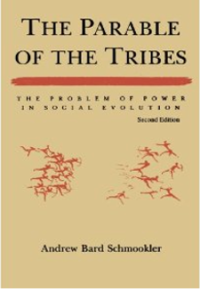 How the Ugliness of Civilized History is not Human Nature Writ Large
 Major Relevant Essays
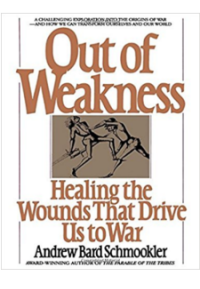 Healing the Wounds, Inflicted by the Reign of Power, that Drive Us to War
 Our Life-Serving Inborn Experiential Tendencies
 A Quest to Bridge America’s Moral Divide – 1999
 The Heirloom Project
 Knowing What’s Right to do Is Not a No-Brainer