


There’s a level that people can get it on together — or not — in which their spirits vibrate together. On the same wavelength. Operating from the same map of the world. Having the same values. Being in a similar state of consciousness in terms of how we look for meaning.
We can laugh together, and our spirits join in that space. Or we can have a good dance of conversation, that takes us into a meaningful shared picture. Or we can go together into some space of wonder and awe.
The part of me that yearns for that experience of kindredness of spirit gets fed widely, but also doesn’t get as fed as fully and deeply as I’d like.
(An example of kindredness of spirit that is incomplete: I can get into a shared state of athletic enthusiasm watching and discussing NFL football with some guys whose politics are deeply at odds with my own.)
I expect that a lot of people have their foot in a variety of different camps, and so feel both akin and not akin to the people in those camps. That experience of only partial overlap shows up often enough in my own life that it makes the feeling of “kindredness of spirit” a precious — and, in some ways, scarce — thing.
I am glad that I can generally find with people some meaningful area of sharing. But, aside from the inevitable issues of personality, and style of interaction, that make deep friendship possible, or not, there basic, broad-brush matters of culture that seem frequently to give me a “partially fed” feeling.
My relationship with the people of the Shenandoah Valley — as strained as we became over the divisions in our politics — grew out of a shared sense of several fundamental values, like for good family life, and for people acting decently and appropriately. Liberals in that region often connect well with their conservative, Trumpy neighbors—that is, as neighbors. They share some sense of a well-ordered human world, at the local level.
That comes up for me also with respect to Jewishness. My ancestry is Jewish, my parents were both Jewish, and so I imbibed from my first moments a kind of “music” of how people think and talk. That means that when I’m with some Orthodox Jews, the style of their cultural dance has a familiarity about it (“familiarity” meaning something like “family”) that gives me a real feeling of connection. But, at the same time, my relation to the observances of Judaism make me feel profoundly alienated.
What’s got me thinking about all this these days is another big cultural divide that complicates my quest for kindredness of spirit. That’s the divide between the cultures of the East Coast and the West Coast.
In my early adulthood, I had a time of “rebirth” in California. My inner renewal was of a major spiritual kind, and it occurred at the time of the counter-culture (late 60s, early 70s). That was an era of visions that went beyond the conventions that defined and confined the American cultural mind — conventions that fit the spirit into an established order.
Whatever the level of confusion in the counter-culture — and there was a lot of that — those who partook of it came to understand that reality was much bigger than was recognized by the conventionally minded.
To a much greater degree, as a general rule, our counterparts on the East Coast remained much closer to American conventional-mindedness.
That regional difference in consciousness still seems true.
Even now, when I’m in some California coastal town, I can see the signs and feel the vibes of what remains from those visions — of nature and the spiritual and of human possibilities — that inspired the spirit of the counter-culture.
Even back then, however, I retained an “East Coast” part of my thinking and values that did not feel kindred to the intellectual laziness and sloppy intentionality of the counter-cultural “tribe” around me. Fuzzy thinking, I continued to think, should be avoided.
In terms of kindredness of spirits, I find that it’s not easy to get both “coasts” in me met.
Now I live in an East Coast community, with East Coasters with whom I share a good deal of common interest, common intellectual discipline, and common political attitudes. I am being met at some levels better than I would be if there were some similar community of people in, say, Marin County, California.
But at the same time, the California side of me does not feel – here — very fully met.
The opening of consciousness that gave me my “California side” matters, because “California” is the place of visions, and visions are central to my spiritual path.
Here’s one illustrative piece of this difference on the “visionary” dimension. An East Coast group, I’d wager heavily, will differ significantly from a California group over the proportion of people who have had meaningful and impactful visionary experiences with mind-altering drugs. I don’t know this for sure, but my strong sense is that nearly none of my new friends would have had such visionary experiences.
Kindredness from overlapping in some important ways. Differing in sensing that reality is vaster and more mysterious than our cultural conventions would have it.
Happy with the new relationships, wanting also to overlap more fully.
Maybe that’s just one personal example of what is a general human condition?
I wonder how many people are part of some group with which they feel altogether one. Fully belonging. Sharing with their community significant spiritual space. Maybe in tight-knit religious communities.
But I expect that, in ways that matter, everybody must deal with that issue of only partial overlap? Doesn’t everyone have so many components that they don’t readily find very complete matches? Do we all find we must settle for sharing one thing with one person and another part of our spirit with another?
The main expression of my spirit is in my writings. That is where I go deepest into seeing things in a spiritually alive, “West-Coast” sort of way, and where I try to articulate that “vision” in an intellectually disciplined and responsible East-Coast fashion.
And some of the envisioning is aided by a mind-altering substance—not as recreation, but as a spiritual discipline, undertaken for seeing more deeply and for discerning the interconnectedness that facilitate “seeing things whole.” What was, in the counter-culture, often a careless form of experimentation I see as a kind of shamanistic practice. That engineering of consciousness brings forth the fruit of my California side.
But much of the form that vision takes, as well as the interpretation and presentation of what has been envisioned, owes much to the intellectual disciplines with which I was raised and educated in an “East Coast” kind of way.
My sense is that my East Coast Riderwood readership appreciates the craft and intellectual clarity of the writings. But I don’t sense that the vision that I am trying to share comes through as the goose-pimply thing that it is for me.
 A Mind-Blowing Collaboration Between a Human and an AI
 My Op/Ed Messages
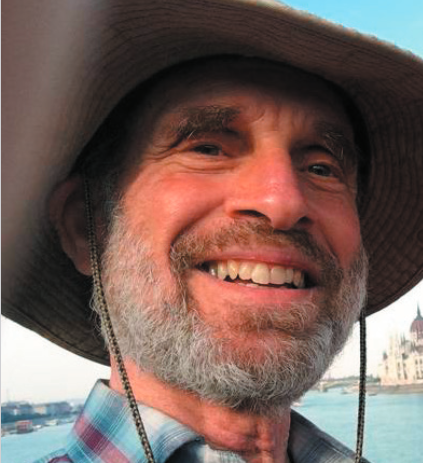 Andy Schmookler’s Podcast Interviews
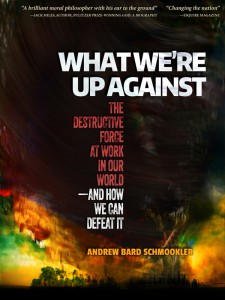 The American Crisis, and a Secular Understanding of the Battle Between Good and Evil
 None So Blind – Blog 2005-2011 on the rising threat to American Democracy
 How the Market Economy Itself Shapes Our Destiny
 The Sacred Space of Lovers
 The River and Its Channel: Bottom-Up (Flow) and Top-Down (Control) in Fostering the Good
 Ongoing Commentary to Illuminate the American Crisis
 What’s True About Meaning and Value
 Andy’s YouTube Channel
 The Fateful Step
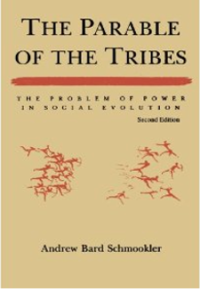 How the Ugliness of Civilized History is not Human Nature Writ Large
 Major Relevant Essays
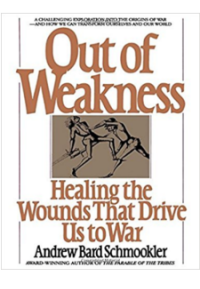 Healing the Wounds, Inflicted by the Reign of Power, that Drive Us to War
 Our Life-Serving Inborn Experiential Tendencies
 A Quest to Bridge America’s Moral Divide – 1999
 The Heirloom Project
 Knowing What’s Right to do Is Not a No-Brainer