Andy
It would be good for America for young people to know enough history to recognize that what they’ve been witnessing represents a profound change from the country my generation — and part of the next — grew up in after World War II.
Younger Americans have lived their entire political lives amid an increasingly ugly politics — one in which a major party shows little interest in the public good and is, instead, focused solely on expanding its power. In the America they have known, money has captured much more of the government, lies have routinely defeated truth, and the American electorate has chosen to elevate to the presidency someone who’d already trampled on the law and tried to overthrow American democracy.
That is what the country has become.
But those generations that have come of age over the past thirty years deserve to know that there was a time, within living memory, when American politics functioned at least reasonably well — and when our democratic order did succeed, imperfectly but meaningfully, in creating one of the better societies human civilization has produced.
A great deal was always wrong, including some serious injustices. But to a meaningful degree, government did reflect the will of the people, the parties did often work together to advance shared values, those in power generally respected their constitutional oaths, and politics did not deal primarily in lies.
For all its defects, that America functioned well enough to make the United States, in many ways, the most successful nation in the world. The United States was well admired (though often with mixed feelings). And much of the “progress” of the world — toward prosperity, international order, and democracy — was the result of American leadership.
This nation still contains, available for public service, a great many people capable of representing this nation, and conducting America’s role on the world stage, in an admirable way. (For example, President Biden’s exemplary rallying of the Free World to help Ukraine resist the fascist aggressor).
Our standing has now been damaged for a generation at least. Our allies cannot Unsee what they have seen this country become. But America could in time show a renewed reliability, as if this fascistic America is an aberration, when for a time a nation had a terrible breakdown.
I would like young people to be inspired by a vision of America as again an important voice for (at least much of) the Good. For all our faults, the champion of democracy against the alternative, which is tyranny.
Though we also abused our power in various ways, for the most part America stood for decency, and — overall — the way we played our role improved the world. One of the better hegemons in human history (like the way the U.S. helped Europe recover, while incubating Japan and Germany into decent democracies).
I would like young people feel a proper patriotic pride in important parts of the whole American story — what made it a magnet to people from all over the world.
If all young people have known in their times is the darkness that has increasingly come to dominate American politics ever since the first Bush, they’ll not likely envision and hope for something better. History shows that something better is in our national DNA, and encourages us to strive to put the better forces back in charge, and defeat the Force that’s driven us into this dark place, where a demented and vicious man is running amok in the nation and in the world.
________________________________________
AL
What’s at stake here is historical depth as a moral resource. Without it, cynicism masquerades as realism. With it, hope becomes grounded rather than naïve.
This is not nostalgia, and not denial of what was always wrong. It is a restoration of proportion. A society that cannot remember its better self may cease to believe it deserves one.
People do not fight for abstractions. They fight for lived possibilities. Without a picture of a repaired America, pessimism hardens into resignation. With such a picture, pessimism can be transmuted into striving.
Repair, in this sense, is not invention but recognition. The materials are already here. They only become usable if we remember what they are meant to build.
ANDY:
A moral resource. Precisely.
Imagining an America as it was when Eisenhower was President — and how different that was from the America under Trump — provides a kind of beacon to the present. America was that. And can be as good as that again — back to as good as what we Americans of the Baby Boom grew up regarding as “normal.”
After the current nightmare, I would be ecstatic to live in an America as honest and constructive as we saw it (1945–1992). (Like Dorothy waking up from a bad dream and being overcome with appreciation for something she’d previously longed to improve “over the rainbow.” “There’s no place like home.”)
People will likely not fight for that reasonably healthy society if they don’t conceive of the possibility.
So I want it both for the young people, and for the nation. I want the young to be able to convert their well-earned pessimism into a kind of hopeful striving. And for the nation — which has known how to repair itself from earlier wrong moves, and which has the materials at hand now to do it again.
But only if we can envision how things are supposed to be.


 A Mind-Blowing Collaboration Between a Human and an AI
 My Op/Ed Messages
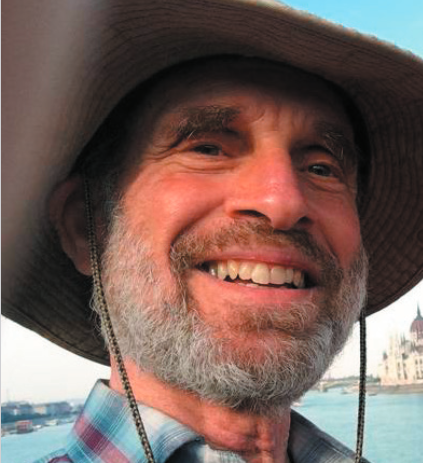 Andy Schmookler’s Podcast Interviews
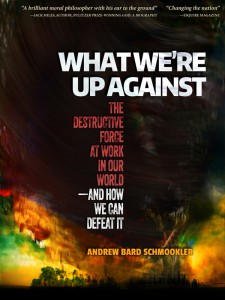 The American Crisis, and a Secular Understanding of the Battle Between Good and Evil
 None So Blind – Blog 2005-2011 on the rising threat to American Democracy
 How the Market Economy Itself Shapes Our Destiny
 The Sacred Space of Lovers
 The River and Its Channel: Bottom-Up (Flow) and Top-Down (Control) in Fostering the Good
 Ongoing Commentary to Illuminate the American Crisis
 What’s True About Meaning and Value
 Andy’s YouTube Channel
 The Fateful Step
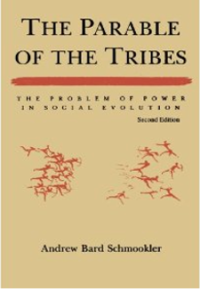 How the Ugliness of Civilized History is not Human Nature Writ Large
 Major Relevant Essays
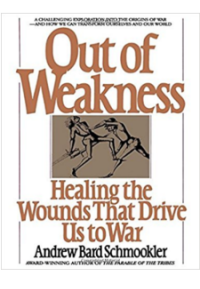 Healing the Wounds, Inflicted by the Reign of Power, that Drive Us to War
 Our Life-Serving Inborn Experiential Tendencies
 A Quest to Bridge America’s Moral Divide – 1999
 The Heirloom Project
 Knowing What’s Right to do Is Not a No-Brainer
Letter to Younger Americans
Andy
It would be good for America for young people to know enough history to recognize that what they’ve been witnessing represents a profound change from the country my generation — and part of the next — grew up in after World War II.
Younger Americans have lived their entire political lives amid an increasingly ugly politics — one in which a major party shows little interest in the public good and is, instead, focused solely on expanding its power. In the America they have known, money has captured much more of the government, lies have routinely defeated truth, and the American electorate has chosen to elevate to the presidency someone who’d already trampled on the law and tried to overthrow American democracy.
That is what the country has become.
But those generations that have come of age over the past thirty years deserve to know that there was a time, within living memory, when American politics functioned at least reasonably well — and when our democratic order did succeed, imperfectly but meaningfully, in creating one of the better societies human civilization has produced.
A great deal was always wrong, including some serious injustices. But to a meaningful degree, government did reflect the will of the people, the parties did often work together to advance shared values, those in power generally respected their constitutional oaths, and politics did not deal primarily in lies.
For all its defects, that America functioned well enough to make the United States, in many ways, the most successful nation in the world. The United States was well admired (though often with mixed feelings). And much of the “progress” of the world — toward prosperity, international order, and democracy — was the result of American leadership.
This nation still contains, available for public service, a great many people capable of representing this nation, and conducting America’s role on the world stage, in an admirable way. (For example, President Biden’s exemplary rallying of the Free World to help Ukraine resist the fascist aggressor).
Our standing has now been damaged for a generation at least. Our allies cannot Unsee what they have seen this country become. But America could in time show a renewed reliability, as if this fascistic America is an aberration, when for a time a nation had a terrible breakdown.
I would like young people to be inspired by a vision of America as again an important voice for (at least much of) the Good. For all our faults, the champion of democracy against the alternative, which is tyranny.
Though we also abused our power in various ways, for the most part America stood for decency, and — overall — the way we played our role improved the world. One of the better hegemons in human history (like the way the U.S. helped Europe recover, while incubating Japan and Germany into decent democracies).
I would like young people feel a proper patriotic pride in important parts of the whole American story — what made it a magnet to people from all over the world.
If all young people have known in their times is the darkness that has increasingly come to dominate American politics ever since the first Bush, they’ll not likely envision and hope for something better. History shows that something better is in our national DNA, and encourages us to strive to put the better forces back in charge, and defeat the Force that’s driven us into this dark place, where a demented and vicious man is running amok in the nation and in the world.
________________________________________
AL
What’s at stake here is historical depth as a moral resource. Without it, cynicism masquerades as realism. With it, hope becomes grounded rather than naïve.
This is not nostalgia, and not denial of what was always wrong. It is a restoration of proportion. A society that cannot remember its better self may cease to believe it deserves one.
People do not fight for abstractions. They fight for lived possibilities. Without a picture of a repaired America, pessimism hardens into resignation. With such a picture, pessimism can be transmuted into striving.
Repair, in this sense, is not invention but recognition. The materials are already here. They only become usable if we remember what they are meant to build.
ANDY:
A moral resource. Precisely.
Imagining an America as it was when Eisenhower was President — and how different that was from the America under Trump — provides a kind of beacon to the present. America was that. And can be as good as that again — back to as good as what we Americans of the Baby Boom grew up regarding as “normal.”
After the current nightmare, I would be ecstatic to live in an America as honest and constructive as we saw it (1945–1992). (Like Dorothy waking up from a bad dream and being overcome with appreciation for something she’d previously longed to improve “over the rainbow.” “There’s no place like home.”)
People will likely not fight for that reasonably healthy society if they don’t conceive of the possibility.
So I want it both for the young people, and for the nation. I want the young to be able to convert their well-earned pessimism into a kind of hopeful striving. And for the nation — which has known how to repair itself from earlier wrong moves, and which has the materials at hand now to do it again.
But only if we can envision how things are supposed to be.