


This ran as a newspaper op/ed in 2021.
**********************************
Can we make things good between us by being open and honest?
That question felt very important to me when I was in my early 20s. I deeply hoped the answer was “Yes!”
It was
• part of the liberation I was then seeking in my life;
• part of my wanting to connect more meaningfully with other people;
• and part of my deep belief in the beneficial power of the truth.
That was more than 50 years ago, when my belief in openness led me to become part of the “Encounter Groups” Movement. The purpose of that movement was to teach the idea that the route to good, fulfilling human relationships is being honest with others about your feelings.
It was a movement that aspired to change the world, as people would take their experience within the group – of building good relationships through openness, leading to feeling closer and more open-hearted – and would practice that same openness with people in their outside lives to make those relationships better.
I loved the idea of such honesty: so much that’s important gets left unspoken, so many relationships become stuck because problems are allowed to fester. (So it felt good to help spread that idea when I advanced in the movement to become a trainer of encounter-group-leaders.)
And I tried to make that idea work in my own life.
Over several years, my experience taught me that it is not so simple: It’s only sometimes — in certain circumstances, and especially with certain kinds of people – that being truly open is useful. In a lot of other situations, it seemed to be wiser to hold one’s tongue, to keep one’s feelings to oneself.
So, after a while, I continued to practice the encounter-group insights but only in highly selective situations. (That “liberation” I sought so long ago proved only partial,)
I eventually came to understand: For openness between people to work, both the one who speaks and the one who hears need to have strengths and skills that not everyone possesses.
• The person who speaks openly must present things well, in a way that is conducive to the interaction going in a wholeness-building direction.
• The receiver of that truth must make constructive use of the truth spoken (even if that truth is not altogether comfortable to hear).
Nothing automatic about either.
Nonetheless, I continued to hanker for the wisdom to make such openness work in more of my life.
Twice I began writing a book to explore “The Value of Honesty,” searching for some way of judging when to be honest, and how to express one’s honest feelings to lead to a good outcome. But both times, I shelved the project because my insights seemed insufficient.
But lately, I seem to have become a notch less careful. One thing that’s interesting about this bolder path I’ve taken is that I never made a “decision” to go back toward my encounter-group ethic. Rather, I know about the change because I noticed it in retrospect.
What I noticed was that in a few relationships that were stuck somewhat unsatisfactorily on some issue about which I had some unexpressed feelings and thoughts, I was laying my cards more boldly on the table, trying to make openness work.
I wondered then: Why am I moving back in that direction now, after all those years of being more measured and careful?
It seems it might have to do with this stage of life.
For one thing, I’ve spent a lot of years working on the “craft” of making conversation constructive.
I learned from the teachings of a movement called “Non-Violent Communication,” which teaches things like how to distinguish between making a “demand” and making a “request,” how to own one’s own needs and not assume that it’s the other person’s obligation to meet them, and how in general to respect other people’s rights to their own feelings and choices. (“Violence” there includes things that can be done just with words.)
(I had my disagreements with some of the Non-Violent Communication orthodoxy – I believe there is an essential place for judgment is an essential strength we need to have – but I regard NVC as a wonderful achievement in enabling constructive openness in human relationships.)
And I spent years practicing “The Dance of Conversation,” on my radio program “A Meeting of Minds,” trying to use honest inquiry and open communication – truth-seeking — to achieve good things.
So I seem to be acting on the hope that the person I’ve become at the ripe age of 75 has learned how to speak truth skillfully enough that good consequences will predominate.
“Predominate”—meaning I don’t need for it to bear good fruit every time. Which connects with another possibly age-related factor that I would call “Going for Wholeness.”
In some traditions, the late stages of life are for focusing on the spiritual path. And on a spiritual path, it seems to me, one does not settle for the broken. One recognizes the sacredness of things being made whole.
So I wonder: is this risk-taking I’ve been doing a reaching toward the kind of “purity” that often marks a spiritual path? Maybe: I seem to be willing to “prune” my relationships, so that those that continue are those in which the truth being brought to bear serves to make things better.
 A Mind-Blowing Collaboration Between a Human and an AI
 My Op/Ed Messages
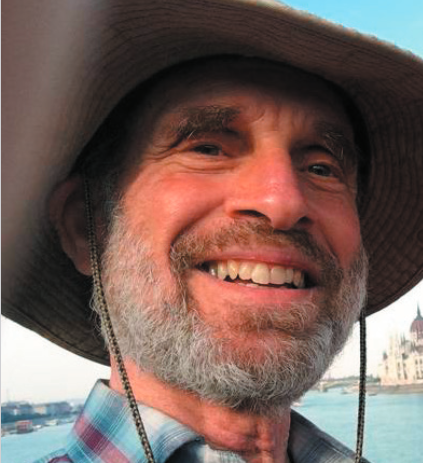 Andy Schmookler’s Podcast Interviews
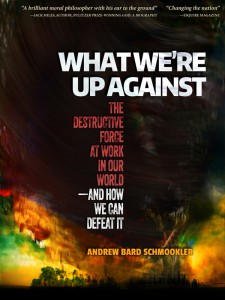 The American Crisis, and a Secular Understanding of the Battle Between Good and Evil
 None So Blind – Blog 2005-2011 on the rising threat to American Democracy
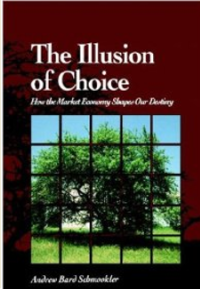 How the Market Economy Itself Shapes Our Destiny
 The Sacred Space of Lovers
 The River and Its Channel: Bottom-Up (Flow) and Top-Down (Control) in Fostering the Good
 Ongoing Commentary to Illuminate the American Crisis
 What’s True About Meaning and Value
 Andy’s YouTube Channel
 The Fateful Step
 How the Ugliness of Civilized History is not Human Nature Writ Large
 Major Relevant Essays
 Healing the Wounds, Inflicted by the Reign of Power, that Drive Us to War
 Our Life-Serving Inborn Experiential Tendencies
 A Quest to Bridge America’s Moral Divide – 1999
 The Heirloom Project
 Knowing What’s Right to do Is Not a No-Brainer