


This piece will be running as an op/ed in newspapers in late July, 2026.
********************************
Starting in the late 1960s, I strove to become a member of the human race—to expand my sense of belonging beyond my American identity and embrace our whole incredible, troubled species. I had come to understand that I was born capable of speaking any of humanity’s thousands of languages and identifying with cultures other than the one into which, through no choice of my own, I had been born. I also saw that the destiny of all peoples depends increasingly on how we manage our global civilization.
But over time, my attention became more focused on America. Starting in the early 1990s, I saw the American cultural system beginning to break apart: our broad national consensus devolving into polarization, and “the will of the people” losing its ability to apportion power in service of the common good. As a patriot, I dedicated myself to doing what I could to repair that breakdown—regrettably, not much.
While I still maintain hopes for America, I’ve also striven to recognize that we’re not promised an ever-upward course as a nation: even great nations rise and fall– maybe to rise again, maybe not.
Other nations that I’ve long cared about have also lost their way.
The once-great Great Britain has seemed incapable of making good political decisions for a while now. Having long admired the literature, films, and television that England has given the world, I hate to see that nation slide as it has over the past generation. New leadership may help, but I fear its political problems arise from some place deeper in the nation’s spirit.
Even worse has been the trajectory of Israel– devolving not so much in terms of a loss of vitality as in terms of the moral spirit guiding its power. Traumatized by chronic threats from its neighbors and made reckless by its overwhelming military superiority, the ruling element that the Israeli people have empowered seems cruel and amoral.
Lately, I’ve begun to focus on the way that even as those three nations are deteriorating (each in its own way), other nations are rising in impressive ways. The two I’ve been most struck by are China and South Korea.
I’ve long seen China — with its dictatorship — as an Adversary to My Country. And that remains true. But as my country has become a destructive force on the world stage, and as China has shown itself capable of making sensible decisions to navigate into the future while the United States has lost its way, I’ve tried to step back to see what it might mean for humankind if “the American century” gives way to “the Chinese century.”
China already has the world’s biggest economy. (It has so many more people that it is less rich on a per capital basis than the U.S., but the overall GDP is greater.) And its military might defeat the U.S. if there were a clash over Taiwan. But this isn’t about who will win the Super Bowl– it’s about whether Good or Evil will dominate in shaping the human future. And in those terms, the China’s impressive rise offers a mixed picture.
China has shown considerable intelligence and prudence—for example, positioning itself to be the world leader on the energy technologies of the future, even as America clings foolishly to fossil fuels. And so far it has refrained from the kinds of disastrous military adventures that have been so destructive of American power and standing in the world.
A wise superpower could be a boon to the human world.
Yet China has also alarmed its neighbors with its bullying ways. And it has grown increasingly autocratic under Xi.
But it is South Korea that has most recently dazzled me with how it has arisen from its troubled history with extraordinary cultural dynamism.
Just as China has shown resilience after two centuries of being exploited by foreign powers, South Korea has emerged as a dynamic society after its own nightmarish experience. For two generations, it was cruelly dominated by the militaristic regime in Japan. After World War II, it was the scene of a horrific war that left Korea permanently divided.
The southern half rebuilt itself as a corrupt dictatorship. But then it evolved into a functioning democracy, showed itself capable of developing great industrial corporations, and wrestled with its diverse cultural elements — its Confucian heritage, its modern freedoms — with exceptional creativity. The once-peripheral Korean society put itself on the world map through its own creative spirit—from K-pop’s global reach to the adventurous storytelling of its television dramas.
A people with a lot to work through showed such spirit that their challenges became achievements.
No nation, no people, is immune from times of national nightmare. Some find the moral and spiritual resources to build themselves into something stronger for what has been endured. Some just continue on the road to deterioration and darkness.
Looking at how China has rebounded from its centuries of dissolution to reconstitute itself as a cohesive and dynamic civilization, and how South Korea has shown the creative spirit to build itself into a world-class cultural and economic force, I wonder about the nations that now dwell in darkness. Will the U.S., the UK, and Israel pull themselves out of their tailspin, and fly high again in our lifetime?
 A Mind-Blowing Collaboration Between a Human and an AI
 My Op/Ed Messages
 Andy Schmookler’s Podcast Interviews
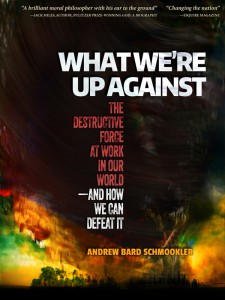 The American Crisis, and a Secular Understanding of the Battle Between Good and Evil
 None So Blind – Blog 2005-2011 on the rising threat to American Democracy
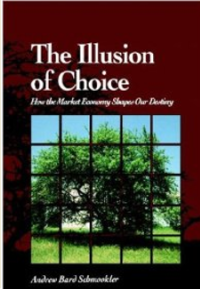 How the Market Economy Itself Shapes Our Destiny
 The Sacred Space of Lovers
 The River and Its Channel: Bottom-Up (Flow) and Top-Down (Control) in Fostering the Good
 Ongoing Commentary to Illuminate the American Crisis
 What’s True About Meaning and Value
 Andy’s YouTube Channel
 The Fateful Step
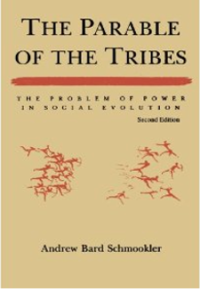 How the Ugliness of Civilized History is not Human Nature Writ Large
 Major Relevant Essays
 Healing the Wounds, Inflicted by the Reign of Power, that Drive Us to War
 Our Life-Serving Inborn Experiential Tendencies
 A Quest to Bridge America’s Moral Divide – 1999
 The Heirloom Project
 Knowing What’s Right to do Is Not a No-Brainer