


A Way to Think About Sex
One can’t help but know that sex is important. So much of the human world, and so much of cultural history, has given sex a prominent place—both in human motivation and in cultural attempts to regulate it—that its importance is unmistakable.
Less clear is how we should understand this dimension of our lives, as individuals or couples or whole cultures. While everyone can see that there’s something IMPORTANT here, there are also big disagreements, and a great deal of cultural confusion about sex. One fundamental question is highlighted by the emergence of the concepts of sex-positive or sex-negative attitudes: Is sex a good thing or a bad thing?
The Evolutionary Perspective
I approach such questions from an evolutionary point of view:
• What we are – by nature — is the result of billions of years of a selective process that shaped creatures to be able to perpetuate their form of life. Only some get to pass along their biological blueprint, and the evolutionary process of Life-on-Earth always chooses Life over Death.
• And “the good” for creatures like us — sentient creatures — is necessarily founded on the fulfillment of our needs, desires, and values in ways that make the quality of our experience positive. We are built to value, and be motivated toward, what we find experientially positive. And the way evolution works, in its selective process, is that what we find experientially positive are those things that, in our ancestral past, were adaptive in enabling our evolving form of life to defeat death by carrying its design into the future.
The question, “How should we humans regard sex?” should therefore be answered in view of this general way of conceiving the fundamental challenge for us humans: i.e. to find the path to human thriving and fulfillment, and to design a civilization that takes the best approach to how that overall goal can best be achieved.
The quest to achieve that goal must take into account two inescapable dimensions: 1) our inborn nature, which sets the terms for what constitutes our fulfillment; and 2) the civilization we have developed, whose successful functioning is also necessary for human needs to be met.
Between those two levels – the first one bottom-up, the second top-down – there have been, unfortunately but inevitably, major conflicts.
How to think about sex should start with the recognition that our nature is deeply shaped by our having evolved as animals, as mammals, as primates, and on into being animals built for culture. And an important part of that shaping is that for us humans — as for many of our mammalian cousins — sex is an intense matter. Its intensity reflects the fact that sex has been, for millions of years, absolutely essential for the perpetuation of our form of life. That same intensity was also required to provide a strong enough motivational force to move our kind to engage in behaviors different in kind from most of the rest of our lives.
It has played so indispensable a role in the cause of Life, and has required such strong motivational forces, that it is no wonder that it is highly charged in the lives of members of our species.
[We also know from experience that sexual feelings are more highly charged than feelings about many other things: one speaks of passion about sex in a way one does not speak of passion for food, even though eating has been no less necessary for our ancestors to have survived in us.]
And the evolutionary perspective clearly says that for both those reasons — life-serving and strong in need — Sex must be regarded as a Good:
• because what serves the perpetuation of Life leans toward the Good; and
• because what is fulfilling (happiness, pleasure) is basic to the definition of the Good;
BOTH OF WHICH SEX EVOLVED TO BE.
We have been built for sex to provide for us some valuable gifts, given intense motivation to do something that is — fundamentally — therefore deeply meaningful.
We are probably like a lot of other mammals, in having our experience with sex tap into something that feels elemental, more than usually charged, and therefore connected with the sacred if we consider life sacred.
The sexual beings we humans evolved to be
But as our species evolved, our sexuality developed a specifically human dimension. And that was because of the specifically human path we took: adopting culture as an essential part of our strategy for survival.
As a result, as our species evolved, the reproduction of our kind became not only about “mating” but also about creating families. Culture changed what needed to happen between the males and the females of the species.
The evolution of our species led to the emergence, in the realm of sexuality, of what we might call “the sacred space of lovers.”
We are built to find “sacred” those things that most richly support human well-being and survival. We are built to be on life’s side, and at those moments where the interests of life are ESPECIALLY at stake, many humans will experience those things to have value that hits some new dimension we might call “sacred.”
And so it is with the ideal of that bond that brings together male and female to transmit life on to another generation. Sex is part of that bond, but the bond is also one of a particular kind of openness and positive feeling and (for a sound human family) love that ideally all go together, because that is at once most FULFILLING and most likely to keep the lovers together.
Evolution made that connection — the father staying with the young being connected with the human species adopting culture as an essential part of its strategy for survival — this way: the young of a cultural animal have more to learn to take their place as adults in the group, and that means that they are dependent and vulnerable, and thus in need of paternal protection, for a longer period of time.
Part of what Evolution selected for was a sexual relationship between mates that the male would choose to stay with, which meant that it favored sex being something deeper — involving more of the heart and the spirit to infuse the sexual relationship with deep meaning — than mere mating.
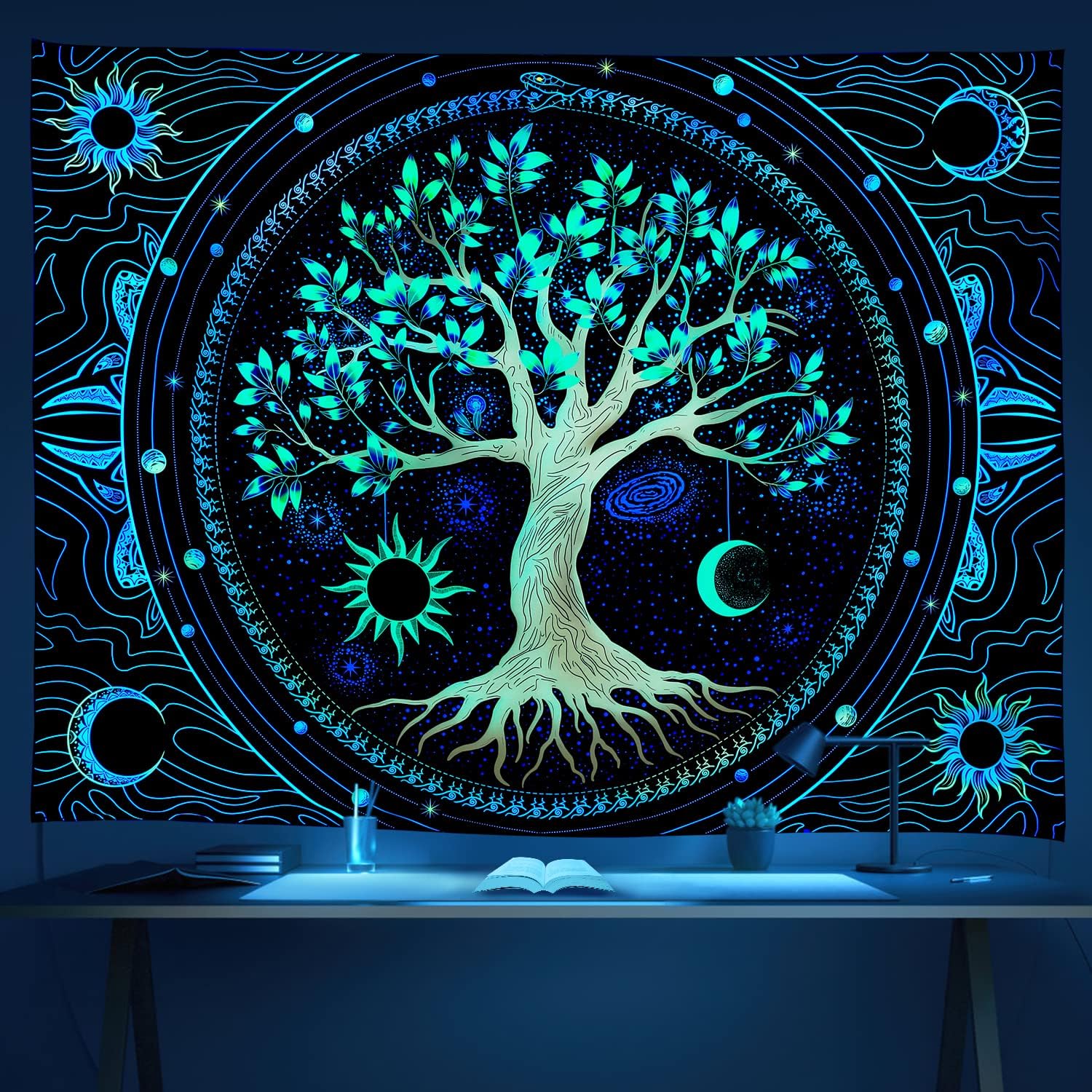
An image of the essence of this ideal I recall from the film AVATAR. Our hero and the princess of the blue people are getting it on — clearly sexual, but represented without sex and with just the sacred feelings — under the sacred tree. They are creating the kind of “marriage” that evolution favored because it increased the chances that their children would thrive. A sexual bond not only conceived those children but also provided the protective, nurturing, loving connection that serves the human good by contributing to both happiness and survival.
(Happiness and survival– a combination that evolution always weaves together, because that’s what works.)
The audience of Avatar is led by the artistry of the film to enter into that happy state of loving bonding between lovers.
Whatever qualifications our circumstances require, any view of sex that is aligned with the Good will have to be, in some fundamental sense, SEX-POSITIVE.
But the qualifications cannot be ignored.
Even within a purely biological framework, the sexual side of life can be complicated and disruptive. Nature never promised us a rose garden.
(Even in a world shaped only by natural selection, the males of the species have a potential path to getting their DNA into the future decidedly not in the spirit of “the sacred space of lovers”: rape can be another path to success, and there is some evidence that rape has been a part of our biological history.)
Why Civilization and Sex Have a Problematic Relationship
But we are the creatures that embarked on the path of civilization, which is most usefully defined in terms that highlight its departure from what has been shaped by biological evolution: Civilization is
“those societies created by a creature that has extricated itself from the niche in which it evolved biologically by inventing a new way of life.”
So we humans are born with a nature presumably essentially unaltered from what was selected for in our mammalian-primate-hunter/gatherer evolution. But the thing about civilization is that it took us out of our biologically evolved niche. And the thing about biological evolution is that – with the rise of civilization, roughly 10,000 years ago — it stopped being the determinant of human social life.
Even as humankind became increasingly CULTURAL — tools, paintings, presumably language — it remained basically continuous with the ancestral past. In their size, structure, and means of subsistence, the societies of hunting-gathering humans remained fundamentally the same as the bands of their far-distant primate ancestors.
But the whole set of evolutionary alignments took a hit when humans made the unprecedented breakthrough of inventing new ways of life that took them out of their biologically evolved niche.
What had been adaptive in that evolutionary niche now might — or might not — be adaptive in this new kind of human world that natural selection had not shaped.
The rise of civilization would have been problematic enough if the way civilized societies developed was freely dictated by humanity in an effort to get their needs maximally met. But civilized society represented a new kind of life-form that broke out of the natural (biologically-evolved) order. And that breakout from the old order was a breakthrough into disorder. That disorder, in turn, inevitably generated a systemic force that shaped civilized societies in ways that, in many respects, were hostile to human nature.
[For why such a result was inevitable with the breakthrough to civilization, see this piece — which is Chapter 1 of my book, The Parable of the Tribes. ] LINK AND STATEMENT ABOUT P OF T – selection for “the ways of power,” defined as what enables a society to prevail in an inevitable “war of all against all.” ]
So the inborn nature that had evolved biologically was inevitably going to be at odds with the civilized societies that were shaped by systemic forces that were not a function of human nature.
One of the central problems for a civilization-creating species, therefore, is the conflict between the demands of societies shaped by a social evolutionary selection for power and the demands of the body, shaped by eons of biological evolution through natural selection.
And it is no surprise that sex — something so primal and powerful in the biological world — would be seen as a threat by cultures shaped around other requirements. Societies shaped by the demands of power need people to override much of “the call of nature” in order to play the roles their societies require in an intersocietal system where only powerful societies can survive.
“Make love, not war” is an appealing slogan. But in the large picture of the millennia since civilization arose, it has been — at least in part – a luxury.
Making the Best of a Difficult Situation
In a broken world, such as the history of the past 10,000 years has given us, people will be too broken to achieve the ideal.
There will be some who find THE JOY OF SEX without love, the animal body having positive experience but the heart and the sense of the sacred not like in Avalon.
There will be some who find love, but are not able to go very deeply into the sacred space that lovers can find through sex. Society should support people getting what they can of such fulfillments, so long as they don’t injure the world due to their limitations.
Given our dilemma — deep and sacred things from nature, yet the need to fit them into an unnatural world — what should we do?
A proper understanding of sex, and of the cultural and historical problem surrounding it, points to two goals:
To help people achieve sexual fulfillment, both at the bodily level and at the level of love (a la Avatar); and
While also giving proper weight to what is required for the larger world to function in ways that support human well-being.
Well-being is the measure– with two kinds of determinants of well-being having to be weighed to find what maximally achieves it.
And, beyond the challenge of adapting to the world of civilization as it is, there is this third vital task:
As with all the other challenges facing humankind — war, climate, intergroup relations — namely, there is the need to change our civilization in ways that will lead to a BETTER HUMAN STORY.
 A Mind-Blowing Collaboration Between a Human and an AI
 My Op/Ed Messages
 Andy Schmookler’s Podcast Interviews
 The American Crisis, and a Secular Understanding of the Battle Between Good and Evil
 None So Blind – Blog 2005-2011 on the rising threat to American Democracy
 How the Market Economy Itself Shapes Our Destiny
 The Sacred Space of Lovers
 The River and Its Channel: Bottom-Up (Flow) and Top-Down (Control) in Fostering the Good
 Ongoing Commentary to Illuminate the American Crisis
 What’s True About Meaning and Value
 Andy’s YouTube Channel
 The Fateful Step
 How the Ugliness of Civilized History is not Human Nature Writ Large
 Major Relevant Essays
 Healing the Wounds, Inflicted by the Reign of Power, that Drive Us to War
 Our Life-Serving Inborn Experiential Tendencies
 A Quest to Bridge America’s Moral Divide – 1999
 The Heirloom Project
 Knowing What’s Right to do Is Not a No-Brainer