


More than half a century ago, I was enthralled by the extraordinary diversity of human cultures. I listened to music from Bali, India, Africa, Bulgaria—feasting on the varied flowerings of our humanity, all the different things we human beings can BE.
This was around 1970, a time when I was undergoing a profound transformation in my own life. I was shedding much of the person I’d become, seeking to discover something more fundamental beneath the particular personal and cultural form I’d acquired. I was searching for my core as a human being, trying to discover who I fundamentally was beneath the person my upbringing had made me.
And the world’s cultural diversity helped me see something essential: I had been born in New Jersey to English-speaking parents, but I had come into the world just as ready to speak Swahili or Mandarin Chinese—and to absorb the beliefs, values, customs, and ways of seeing the world of my cultural surroundings. Had I been born into a different culture, I would have become a different kind of person.
The person I had become was only one of the countless different kinds of human beings I might have become, but for chance.
But what I discovered at that time of personal crisis has implications for the challenges facing humankind.
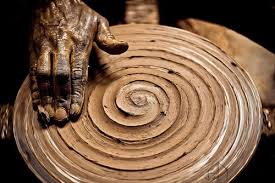
Recognizing how many different ways each of us might have become helps us see our own culture—and ourselves—in a different light. The beliefs, values, and ways of living that seem so natural to us are only one among many possible ways of being human. Each human being takes finished form according to the images promoted by his culture. Any single culture, therefore, is a narrowing of the full spectrum of the individual’s potential humanity. No one culture has a monopoly on wisdom about how human beings should live, and none can fully capture our humanity.
People are perhaps most fully human when they become aware of the contingency of their cultural forms, and thus able to break free from them. Cultural diversity is a necessary mirror of our potential; it provides a way for us to step outside ourselves.
Embracing cultural diversity can change how we regard people from other cultures in a way that could even affect human survival. Seeing the deep thing we have in common is no small thing in a world where we must work together across our cultural differences to deal with the global challenges that face human civilization. While cultural diversity offers us a means to expand our understanding of ourselves and others, cultural homogenization threatens to narrow human consciousness.
But there’s another reason to value the diversity of human cultures: the historical forces that have been driving the process of “cultural homogenization” have not all been governed by the human good.
Some of the aspects of culture that spread globally have been benign: like giving children inoculations against dangerous childhood diseases, and like preventing populations from being decimated by famines. But much of the homogenization through the millennia has come from a social evolutionary process that people never would have chosen but could not avoid.
When civilization arose, societies came into contact with one another in a system without any overarching authority to regulate their interactions. This anarchy made the struggle for power inevitable. And that struggle means that cultural options that don’t confer the means to prevail in such a struggle will be eliminated while the ways of power spread irresistibly throughout the intersocietal system– as the powerful destroy or transform the less powerful, and as the means of self-defense also require a society to adopt the ways of power. Thus the inevitable “war of all against all” in the anarchic system that arises with civilization makes inevitable the homogenization of culture in the direction of power-maximization.
The homogenization of cultures has continued for millennia—both from the adoption of beneficial discoveries and innovations, and from the problem of power compelling societies to defend themselves against aggressors. Whatever the causes, insofar as this process has extinguished distinctive ways of expressing our humanity, it represents a kind of impoverishment.
Languages have been disappearing continually, as a global civilization emerges. Unique cultural forms of expression and distinctive ways of life have been absorbed into larger societies. The spread of modern industrial civilization has made once very different places increasingly alike. The streets of Seoul and London, for example, are far more alike today than they were a century ago.
The human world is becoming less culturally varied.
More than half a century ago, Loren Eiseley offered a haunting image of what may be lost as humanity moves toward an increasingly uniform civilization:
“Increasingly there is but one way into the future, the technological way. The frightening aspect of this situation lies in the constriction of human choice. Western technology has released irrevocable forces, and the “one world” that has been talked about so glibly is frequently a distraught conformity, produced by the centripetal forces of Western society. So great is its power over men that any other solutions, any other philosophy, is silenced. …. (It is as though, instead of many adaptive organisms, a single gigantic animal embodies the only organic future of the world.)” (The Unexpected Universe, 1969, pp. 38-39.)
 A Mind-Blowing Collaboration Between a Human and an AI
 My Op/Ed Messages
 Andy Schmookler’s Podcast Interviews
 The American Crisis, and a Secular Understanding of the Battle Between Good and Evil
 None So Blind – Blog 2005-2011 on the rising threat to American Democracy
 How the Market Economy Itself Shapes Our Destiny
 The Sacred Space of Lovers
 The River and Its Channel: Bottom-Up (Flow) and Top-Down (Control) in Fostering the Good
 Ongoing Commentary to Illuminate the American Crisis
 What’s True About Meaning and Value
 Andy’s YouTube Channel
 The Fateful Step
 How the Ugliness of Civilized History is not Human Nature Writ Large
 Major Relevant Essays
 Healing the Wounds, Inflicted by the Reign of Power, that Drive Us to War
 Our Life-Serving Inborn Experiential Tendencies
 A Quest to Bridge America’s Moral Divide – 1999
 The Heirloom Project
 Knowing What’s Right to do Is Not a No-Brainer